

Surgical strikes, minimal casualties, night-time raids. We’ve been here before. But this time we’re not watching cable news correspondents embedded inside the American War Machine at prime time.
With the smartphone’s usurpation of the TV, memeable content is instead being beamed straight into our pockets via the White House at all hours of the day.
Uncensored and unedited, this digital propaganda has successfully established the initial narrative around Trump’s invasion of Venezuela.
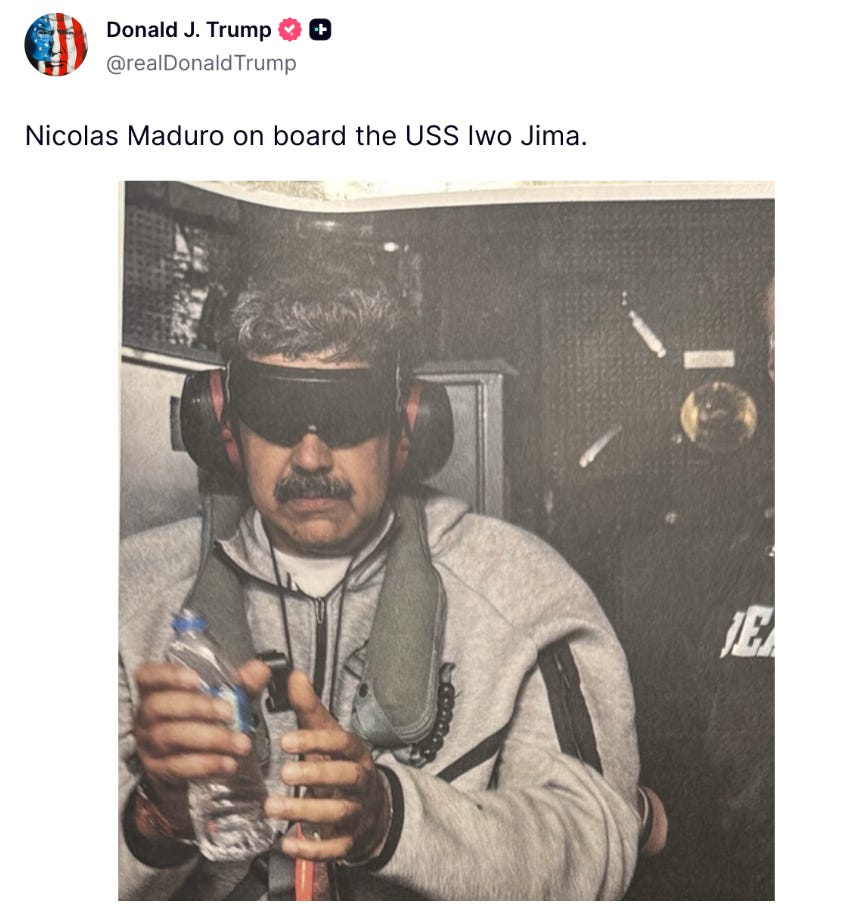
There’s been little talk of those killed by the assault, as if the conflict didn’t really happen, while Nicolás Maduro’s moustached and blindfolded face has spread across the internet.
‘Who is Nicolás Maduro?’, SEO-friendly articles asked as live blogs furiously charted the reaction to the raid. Elsewhere, hot takes on the dictator’s downfall spread across social media.
Whether they were for, against or indifferent to the invasion, posters have been inclined to use Maduro’s now infamous capture-shot as a thumbnail.
If somewhat sinister, it’s good for engagement with its low-res, we’ve just caught a bad guy, quality.
For their part, the President and his allies quickly branded the now ex-President of Venezuela as a narco-terrorist, warned the rest of the world ‘not to play games’ with the US and falunted Trump’s man-of-action credentials.
“If he says he’s serious about something, he means it,” Secretary of State Marco Rubio told a press conference, timed so America could wake-up to Trump’s hour-long reflections on the kidnapping.
No US personnel or equipment were harmed in the process, we learned, and the country’s “very large” oil companies would soon be deployed to Venezuela to re-establish the industry there.
“They sent everybody bad into the United States,” Trump, flanked by Rubio, War Secretary Pete Hegseth and Pete Hegseth’s brown shoes (oh so very brown), added for good measure.
We had to take his word for it, no mainstream media packaging needed. The President had served up Maduro and the memes. Soon emergency podcasts whirled up, one thousand and one reasons were given for the assault.
Was it China? Was it Russia? Was it energy prices? And what the hell is the Monroe Doctrine?
They only had the White House’s information to go on, but that didn’t stop the commentaries. Forget the fixers, the foreign correspondents too, there’s content to be made.
Trump knows this as he curated carefully worded missives to be fired-out over Truth Social. The fog of war means he can’t be fact-checked.
But it didn’t go all his way. Trump’s old TV producer brain must have been frustrated that he couldn’t release the footage of the Maduro operation, which would have been live-streamed into the President.
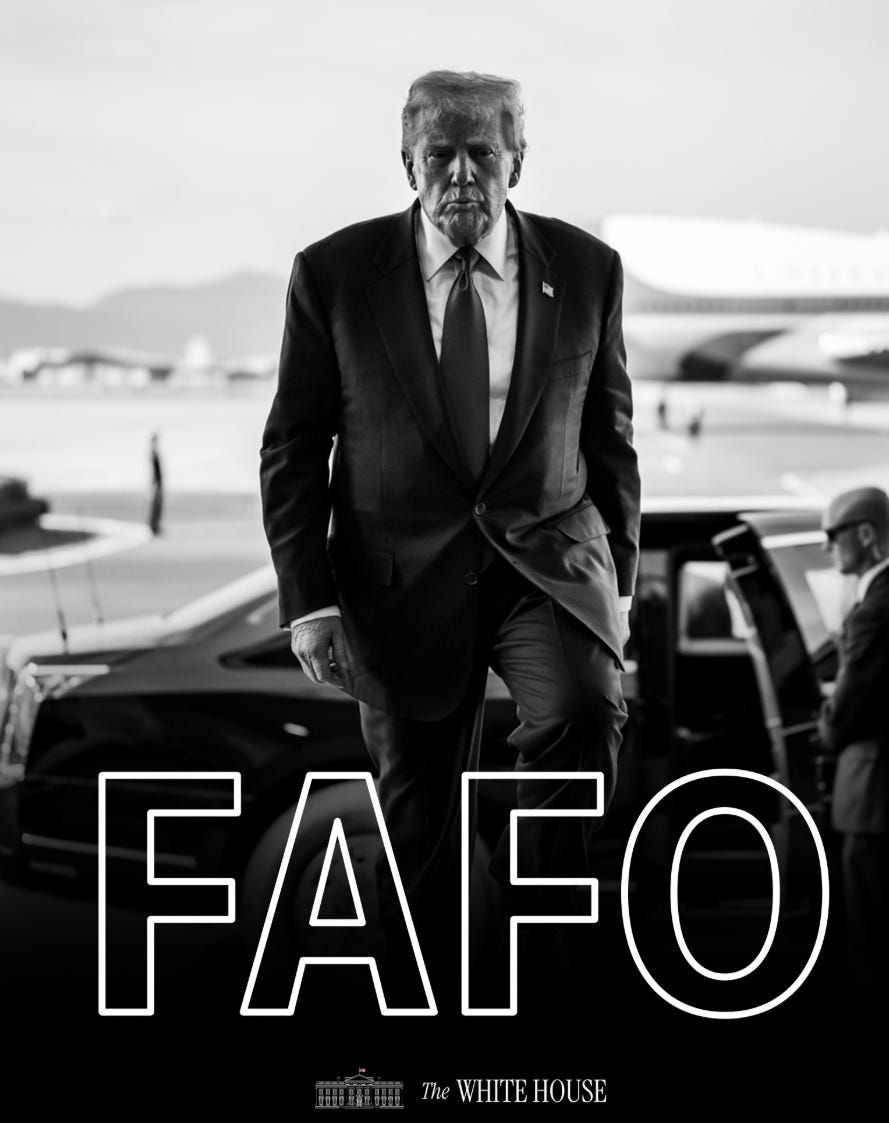
Creators, through their self-imposed sense of urgency, have used the hygienic White House account. There are no mangled bodies in this version of events, only victories – big and beautiful ones, to quote a phrase.
As for the military tactics deployed by the Americans as they raided Fort Tiuna, there is also no time for ignorance.
Media generalists must pose as experts, aggregating the slogans, images and narratives provided by Trump. It was those Special Forces/CIA chaps that done it, they parroted.
A representation of the invasion, abstracted from the real-world events they were created from, was quickly created.
The movie about the conflict played out in real-time and allowed all of us to participate in it thanks to social media.
It was like Chuck Norris’ The Delta Force, but we got to write the script and infinite versions of the production were allowed.
The only plot rule was that the main character had to cheat death and he had to be shown riding into town — the town being Caracas — to capture his rival.
Whether those characters are heroes or villains was up to you, so is the yet be written conclusion of the story.
You may want to write a sequel, a follow-up which focuses on other towns. Havana comes to mind.
Recent TPM posts