


US consumers are tapping out, Trump’s inflation and economic ratings are falling fast and the White House’s Federal Reserve Chair pick, expected in early 2026, adds uncertainty around interest rates.
The outlook is not looking good for the President and the end of the Russian-Ukraine war can’t come quick enough to potentially lower oil and natural gas prices.
At the same time, the US can’t build nuclear power plants quick enough to meet the new and massive compute demands from data centres.
I’ve outlined all of the relevant data below, including some notable reports out of Virginia, where two worlds of the Trump White House – immigration enforcement and generative AI hyperscalers – are colliding.
US inflation figures
Via The Bureau of Labor Statistics, October (link):
“The index for energy increased 1.5 percent in September, after rising 0.7 percent in August. The gasoline index increased 4.1 percent over the month. (Before seasonal adjustment, gasoline prices increased 1.1 percent in September.)
“The index for electricity decreased 0.5 percent over the month and the index for natural gas decreased 1.2 percent over the same period. The index for energy increased 2.8 percent over the past 12 months. The electricity index increased 5.1 percent over the 12 months ending in September and the natural gas index rose 11.7 percent. In contrast, the index for gasoline fell 0.5 percent over this 12-month span.”
Rising energy costs lift US producer prices in September
Via Reuters, November (link):
“Producer goods prices jumped 0.9%, the largest gain since February 2024, after climbing 0.2% in August. Energy goods, which accelerated 3.5%, accounted for two-thirds of the increase in goods prices.
“Wholesale services prices were unchanged after falling 0.3% in August, when trade margins were compressed. The decline in trade margins had suggested that wholesalers were absorbing some of President Donald Trump’s sweeping tariffs on imported goods. That has largely resulted in moderate consumer prices, though the cost of some goods at the supermarket, including beef, coffee and bananas, has surged.”
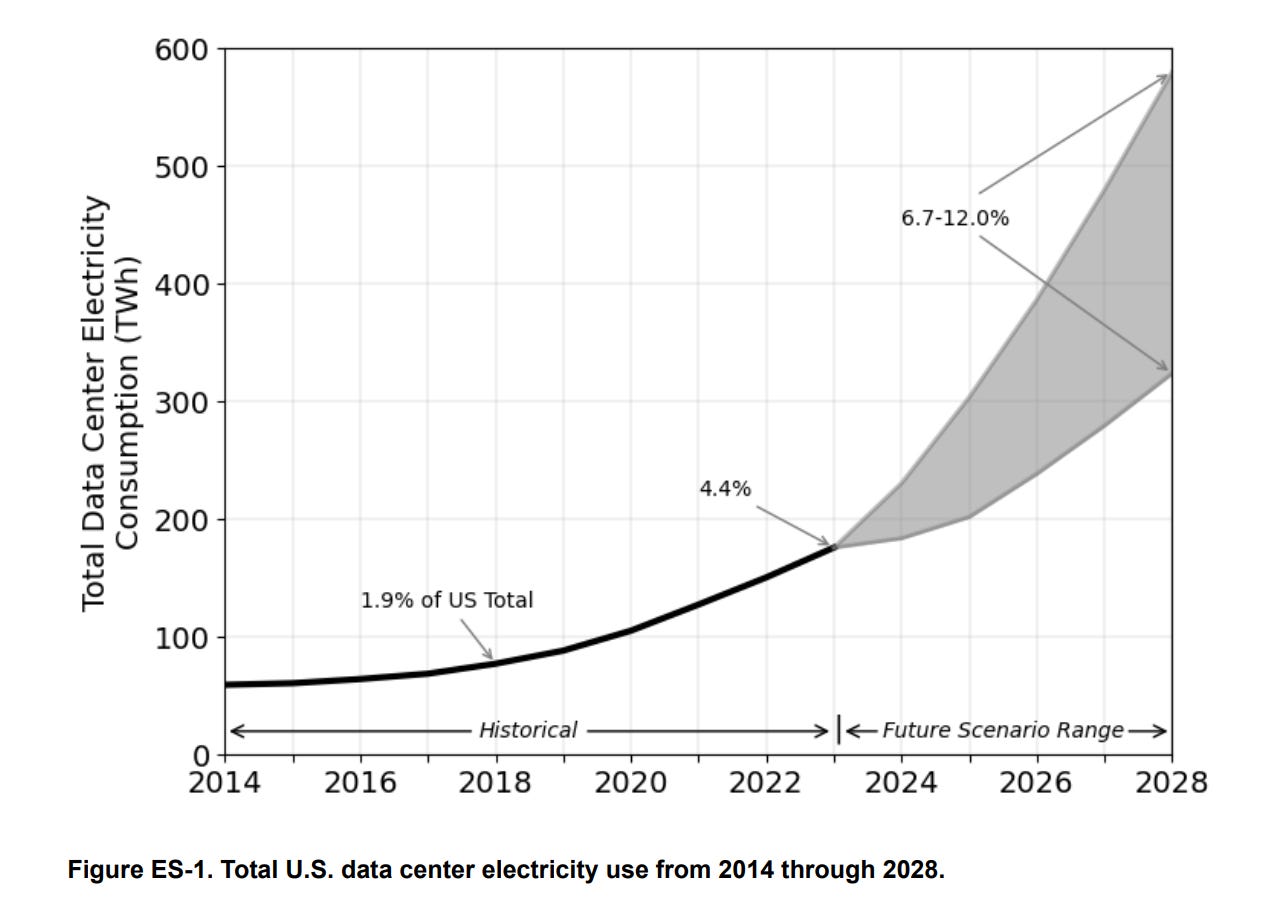
The data centre energy graph
Via The Lawrence Berkeley National Laboratory, December 2024 (link).
Trump poll ratings
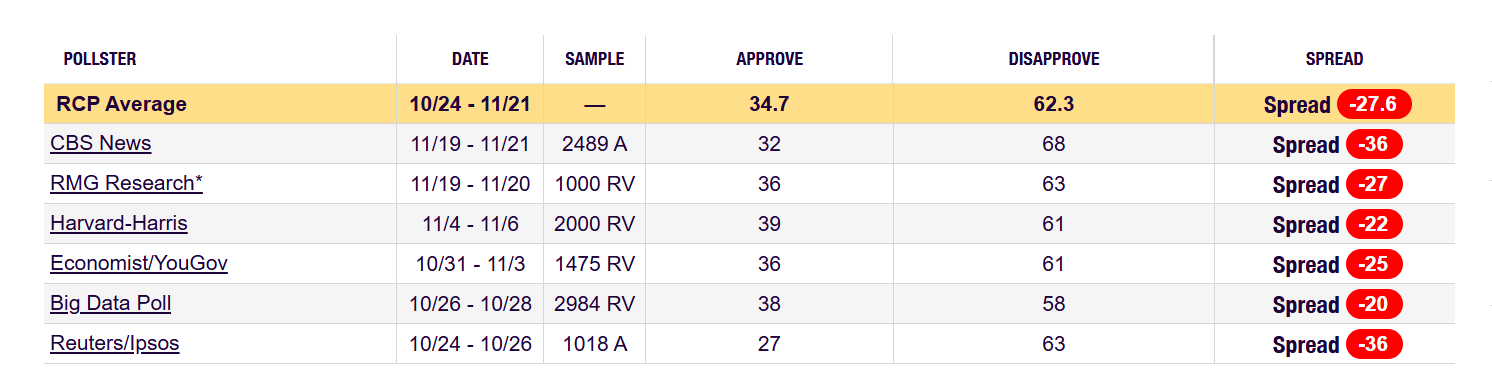
-27 disapproval rating on inflation for Trump (link)
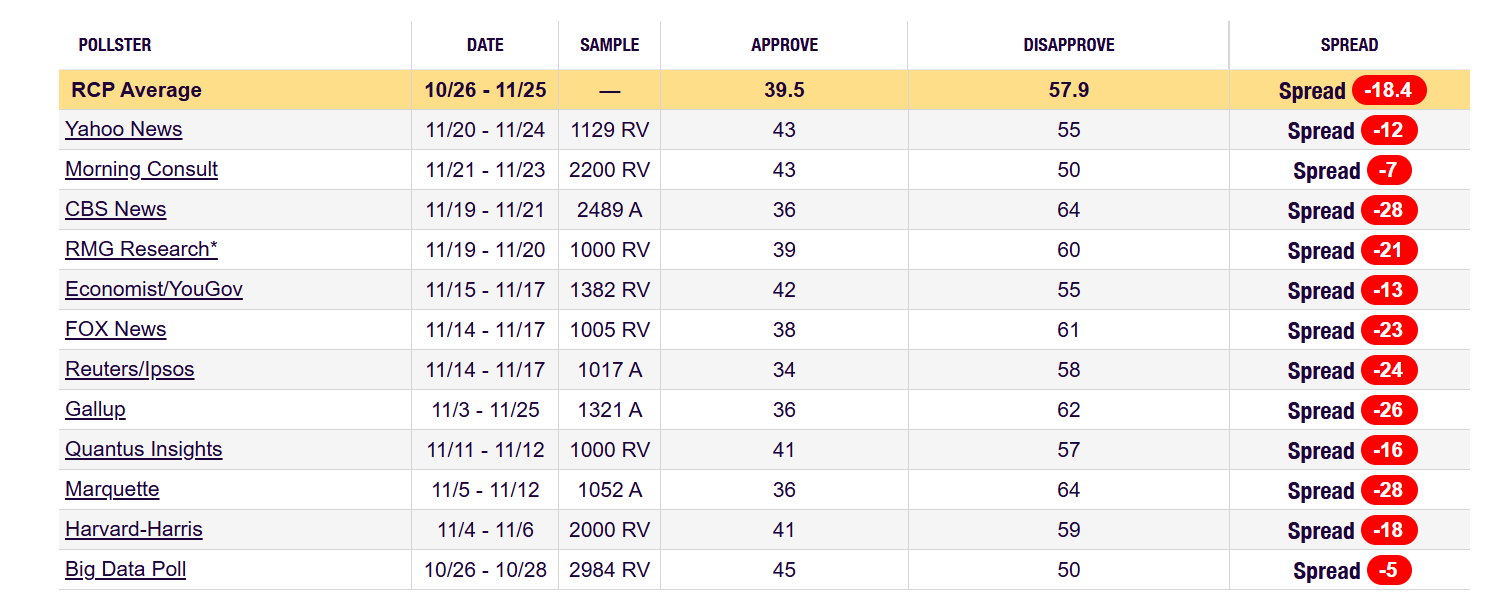
-18 disapproval rating on the economy for Trump (link)
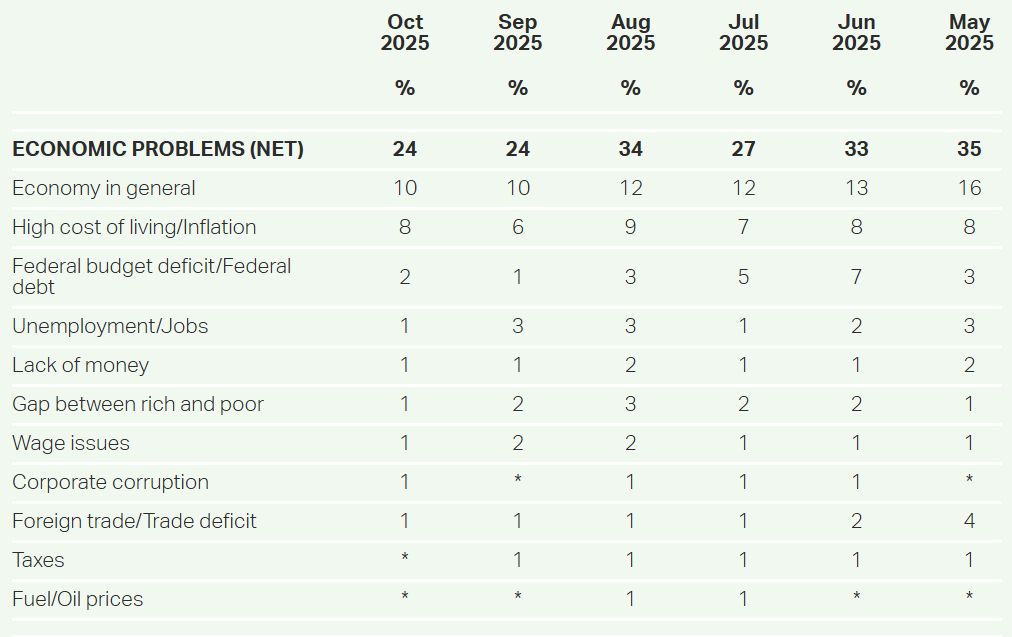
Gallup Concerns Index (link)
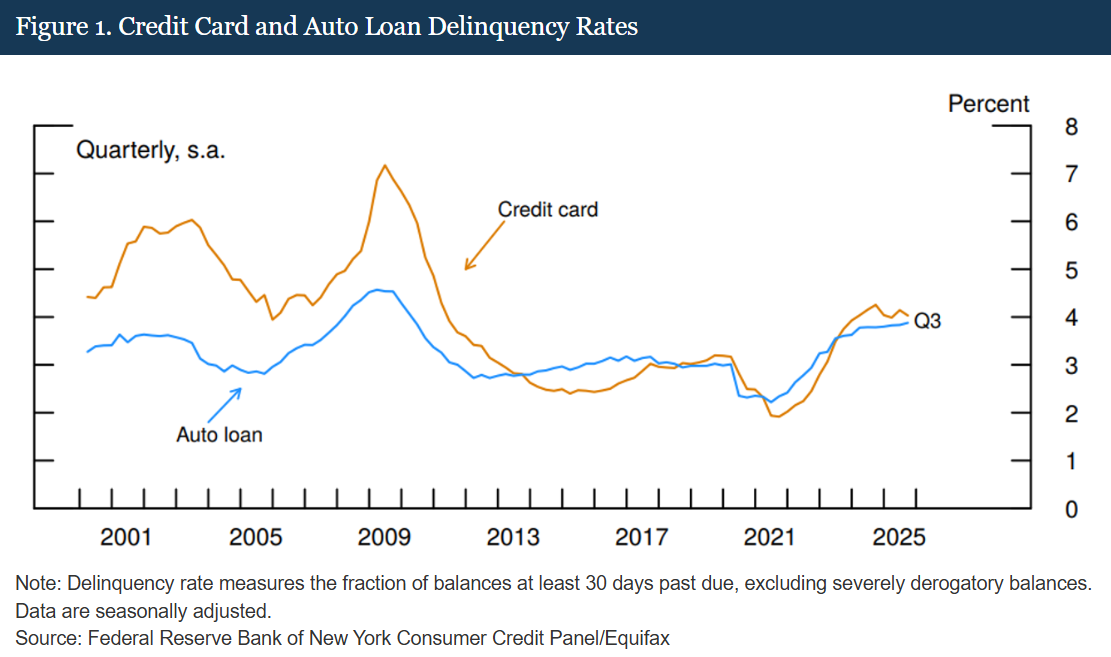
US consumer delinquency rates
Via The Federal Reserve, November (link):
“After plummeting to all-time lows during the pandemic, delinquencies on credit cards and auto loan debt increased to levels not observed since the Great Financial Crisis (GFC), raising concerns about the health of household balance sheets.”
Home Depot warns of ‘consumer uncertainty’
Via Company’s Q3 2025 earnings (link):
“…And then you talked about the overall economy in housing. We did expect to start seeing some pickup in demand in the second half of the year. And this wasn’t just the calendar dynamic of, oh, things will be better in the second half.
“We were expecting interest rates and mortgage rates to come down, which they did, that would have been some assistance to housing. But we really just saw ongoing consumer uncertainty and pressure in housing that are disproportionately impacting home improvement demand.”
Record number of subprime borrowers miss car loan payments in October
Via Reuters, November (link):
“The share of subprime borrowers at least 60 days behind on their auto loans rose to 6.65% in October, the highest level on record, according to Fitch Ratings data going back to the early 1990s.”
Mortgage delinquency rates
Via WalletHub, November (link):
“The rate of mortgage delinquency varies significantly from city to city, ranging from around 3% to nearly 24%. The bad news is that while people in some cities are having much more difficulty paying their mortgages than others, the problem as a whole is also getting worse this year. In fact, the mortgage delinquency rate actually increased in all but 13 of the 100 cities in our study between Q1 2025 and Q2 2025.”
One in three student loan borrowers risk default as delinquency rates soar
Via The Guardian, June (link):
“About 5.8 million federal student loan borrowers were 90 days or more past due on their payments as of April 2025, according to a new analysis from TransUnion.
“That’s roughly 31% of borrowers with a payment due, up from 20.5% in February and nearly triple the 11.7% delinquency rate reported in February 2020, just before the pandemic began. The April figure represents the highest delinquency rate ever recorded.”
Trouble in Virginia
US utility plans to raise bills despite Donald Trump’s vow to slash energy costs
Via The FT, published in April (link).
“One of America’s biggest utilities has proposed raising consumer bills by 14 per cent next year to cover costs linked to soaring electricity demand and inflation, in a blow to Donald Trump’s pledge to slash energy prices.
“Dominion Energy, which provides power to 3.6mn customers in Virginia, North Carolina and South Carolina, said the rising cost of labour, materials and upgrades to the grid required it to increase prices for the first time in more than 30 years to ensure a reliable service.”
Via Axios, published in August (link):
“Between May 2024 and May 2025, the average cost of electricity for residential customers in Virginia rose about 3%, from 14.95 cents to 15.41 cents, according to the U.S. Energy Information Administration.”
Virginia Has Become a Hotbed for Immigration Arrests
Via The New York Times, published in July (link):
“Arrests in the state by Immigration and Customs Enforcement agents are up more than 350 percent since 2024, one of the steepest increases in the country.
“This outpaces the growth in ICE arrests in Democratic-run states like California and New York and Republican-controlled states like Florida and Texas. Nearly 3,000 people were arrested by ICE in Virginia in the first five months of 2025, on par with numbers in a much larger state like New York.”