

I’m sure you could strap a smart-watch to a dog, float a sausage over its head and hope it chases after the mystery meat for five kilometres. Otherwise, it’s not really worth cheating running apps to set new ‘personal bests’.
Unfortunately, you will have to get out there and do the work yourself. To quote a phrase, “who’s going to carry the boats?” (link). You are and the good news is that you’re going to get loads of likes on the internet for it.
That’s just part of the secret to Strava’s success, validation and vanity.
The San Francisco-based company, named after the Swedish phrase ‘to strive’, launched more than two decades ago amid the aftershock of the 2008 financial crisis.
But the app’s origin story actually dates back much further. Co-founders Michael Horvath and Mark Gainey met on Harvard University’s rowing team in the late 1980s.
Horvath later earned a PhD, going into academia, while Gainey joined the world of investment banking.
The pair kept in touch and the itch to recreate those competitive and collegiate days got back under their skin in the early 1990s. This led to the creation of their first venture, Cana Sports.
The idea was to use the nascent internet to bring your friends together to train via a virtual locker-room.
But the year was 1995. With no broadband, universal computer access and smartphones, Cana was too far ahead of its time.
Though this business didn’t take off, it did give Horvath and Gainey vital experience in the start-up world.
The duo would leverage this knowledge again in the late 2000s as the Web 2.0 ecosystem was establishing itself. Strava was launched.
Things started off slowly and the company was bootstrapped until 2011, when Horvath and Gainey secured a $3.5m Series A round.
The thesis was prophetic: GPS-enabled devices would become exponentially more popular amongst consumers, including actual and wannabe athletes (link).
Sigma Partners was the first VC to back the plan, with Sequoia Capital joining the party in 2014. Their cash, including several other funding rounds, accelerated Strava’s growth, putting it in a near perfect position for what was to come next.
When the Pandemic broke-out at the start of 2020 the app had just 40 million users. It was still a niche destination, but thanks to government-enforced lockdowns people took to exercise to break their boredom.
Strava was the go-to app to test yourself against your safely distanced friends and colleagues and by the end of 2023 the platform had more than 120 million users.
The Privacy Paradox
That is the business’ other secret to success: timing. Strava, as its founders envisioned, had caught on as the wearable craze took off.
Smartwatches are now ubiquitous with our digital lives and so is our paradoxical approach to privacy.
Though we say we want less snooping on our movements and tastes, we are happy to forgo full privacy in order to engage with and play a part in the user-generated economy.
This is especially true of Gen Z, who have been dropped into an online world of TikTok, multi-screening and super-fast broadband.
This generation, more than any other, has also snubbed alcohol. The lockdowns shut the pubs and fitness apps promoted teetotal behaviour by showing the negative impacts of booze on sleep and your heart-rate.
It’s hard to escape last night’s bad choices when they’re on your wrist for the next week.
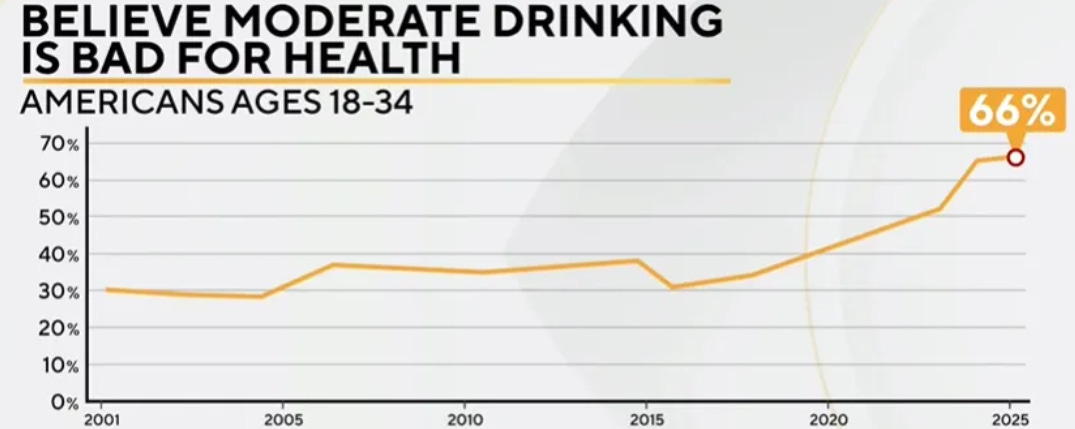
These trends have super-charged the popularity of running, cycling and swimming.
The London and New York marathons saw applications jump by 31% and 22% respectively last year, for example, while Hyrox, a cardio-intensive workout sport, has seen its own boom (link).
The self-described ‘fitness competition for everybody’ now regularly attracts thousands of participants to its events, which are deliberately limited to drive-up demand and maintain the quality of the production.
Hyrox has subsequently become notorious amongst fitness fanatics for its waiting lists, with the most physically and financially willing amateur athletes – one event can set you back $180 just for the entry fee – to travel abroad.
Factor in flights, food and accommodation, and you are easily hitting the $500 to $600 mark to run around a warehouse on a weekend.
It’s worth it for the Gram though, with many participants choosing to be upsold on the professional photography package (link).
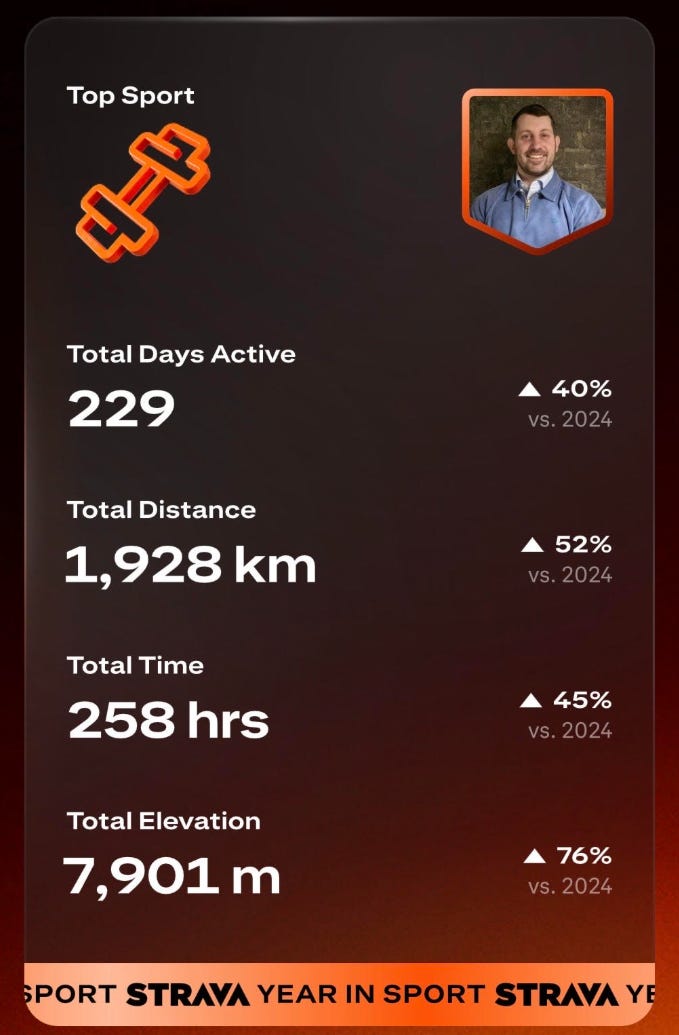
This is the ecosystem Strava and its freemium model is thriving in (the upgraded version is $80 per year) – more and more people want to workout and they’re willing to spend a significant slice of their disposable income on wellbeing.
And that’s the app’s final secret, positivity. You can call it vainglorious, you can call it egotistical, but you still have to commit to self-improvement while someone cheers you on, albeit online.
As we move further into the AI-generated internet, Strava’s user-generated model is offering a genuine alternative to the doom and gloom seen elsewhere.
The company reportedly wants to take that proposition to the public markets and recently hired the former CFO of Pelton, Barry McCarthy (link).
With a most recent private valuation of $2.2bn, Strava is looking to see what Goldman Sachs, JPMorgan, and Morgan Stanley can bring to an IPO.
In the meantime, its user base continues to grow both organically and thanks to Strava’s acquisitions, including the recent purchase of Runna, an AI-supported coaching app (link).
As of January, Strava has 180 million users, a 350% increase on where it was in 2019. By comparison, Reddit has more than 120 million daily active users.
That virtual clubhouse idea doesn’t sound so niche anymore.
Other things I’ve found interesting
A young cinematographer couldn’t land a job so he went on a one-year birdwatching trip with his brother. They turned the adventure across America into a documentary (link)
Neural Foundry is a big fan of Anthropic’s language model, Claude (link)
A16Z has closed a $15bn mega-round and infrastructure will be the focus of one of its new funds (link)
The UK’s Raspberry Pi has warned of chip shortage thanks to the AI boom (link), while the UK government is looking for someone to lead its Sovereign AI Fund (link)
A long-form interview of Demis Hassabis, co-founder and CEO of DeepMind (link)
Nick Hilton on Grok (link)
There are lay-offs at Politico (link) as Semafor raises $30m (link) thanks to its thriving events business