

Either through cock-up or conspiracy the British public have been denied contemporaneous information on one of the most sensitive political topics of our age for years.
Between 2016 and 2024, and perhaps even longer, important and independent reports on immigration have been routinely delayed in Whitehall.
I first started reporting on this phenomenon around the EU Referendum campaign. The government of the day and later Number 10 administrations would defer to a serious sounding group on immigration policy, The Migration Advisory Committee.
The MAC, as it’s known in Westminster, is typically made up of independent economists. Probably their most important role is to recommend which occupations need to go on the government’s shortlist of workers (link).
If the UK needs more nurses, doctors or plumbers, for instance, they would be added and restrictions would be lifted. The MAC also provides research on the impact of visas, seasonal work and other migration-related matters.
It’s all a bit dull and, somewhat understandably, other political journalists would simply report the MAC’s findings and move quickly on to another story. However, I decided to look into the organisation and, as I did, I started to discover some intriguing things about the MAC.
To begin with, though the MAC is independent, its reports are published by the Home Office. A fact I will come onto shortly. Secondly, the MAC doesn’t necessarily set the scope of its reports. Finally, and perhaps most importantly, the organisation was effectively politicised in 2015.
Net migration had reached a new record high of more than 330,000 (link) and David Cameron, who had promised to cut net migration to “tens of thousands”, asked the MAC to advise on “what more can be done to reduce levels of work migration from outside the EU”.
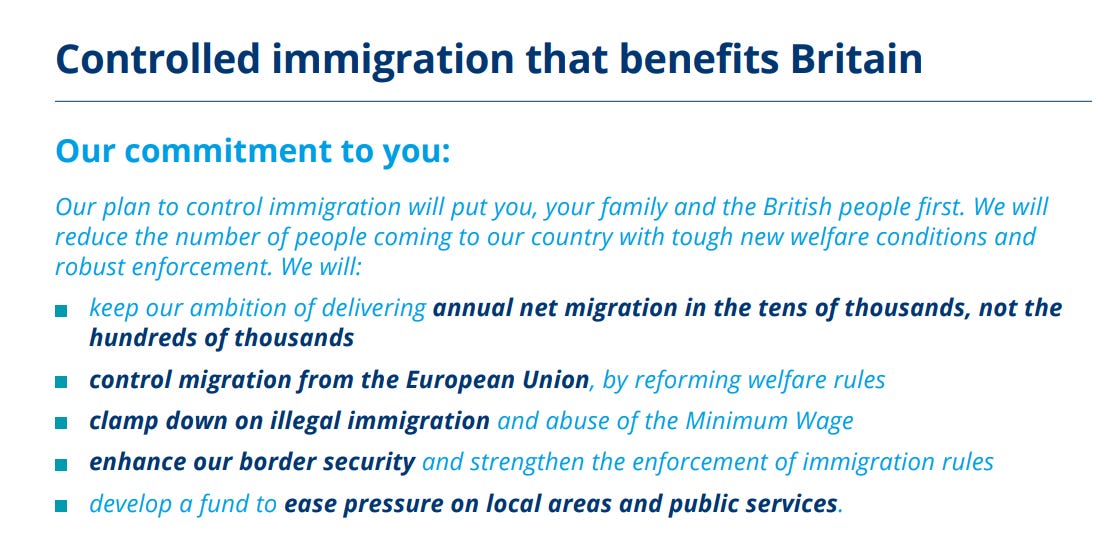
For a small non-departmental public body, this was an awful lot of pressure to bear. That stress would rise to new levels in Whitehall in 2016 when David Cameron and George Osborne used the fully machinery of government, including £9 million of taxpayer cash on leaflets (link), to campaign against a split from the EU.
Cameron staked his political career on the referendum, thinking it would be an easy win. But as the June vote got closer and closer so did the polling between Leave and Remain.
In what still looks like a desperate move today, the Prime Minister claimed a potential split from the EU would to lead Europe descending into war (link).
That was the context in which I published the below in January 2017, seven months after the Brexit vote:
“…Isn’t it strange then that the last minutes of the so called MAC were published on 24 June, a day after the EU referendum?
“Well, that was before yesterday when I asked the Home Office, which provides clerical support to the group, what had happened.
“There was no explanation, just a promise: “The minutes will be on the website next week.”
“True to the spokesperson’s word, the minutes -- for July, October and November -- have been published on the MAC’s governance page.
“Having scanned through the documents, I can assure you there are no revelations or potential embarrassments for the government.
“So why has it taken so long for the minutes to be published?”
Why indeed? From a journalistic point of view, the situation was frustrating. It doesn’t make much of story if the information is eventually going to be published, but you had to give the Home Office a right to reply.
It’s good journalistic ethics, but it also gives the other side an opportunity, through a variety of tactics, to kill any article.
No longer a reporter, I watched the MAC and its minutes from afar. The same pattern of behaviour was still going on up until this year. To prove the point, here’s a schedule of updates relating to the MAC’s 2024 meetings:
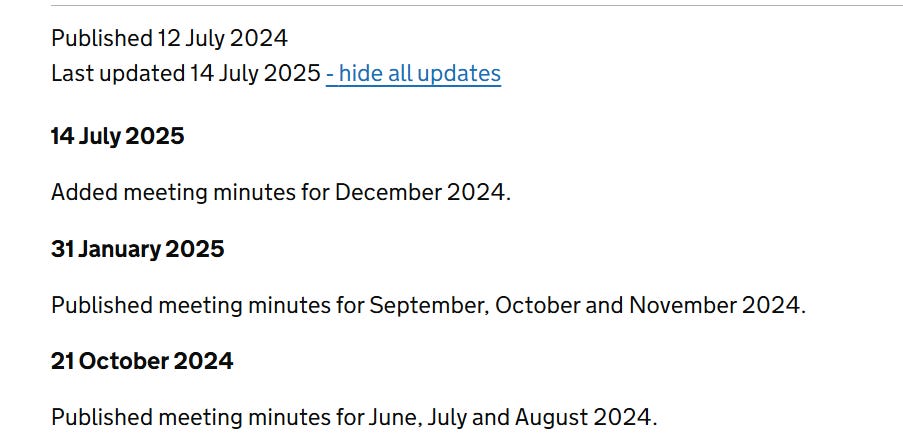
As an isolated administrative issue relating to an organisation which nobody’s heard of there isn’t much of a story here. But here’s the kicker: the same thing was also happening with other independent bodies associated with the Home Office.
In September last year the interim Independent Chief Inspector of Borders and Immigration, David Bolt, used his annual report to urge the Home Office to publish his reports within eight weeks of receipt (link).
Like the MAC, the Immigration Inspector’s office has to go through the Home Office for publication.
Bolt’s predecessor, David Neal, was sacked (link) at the start of 2024 for going to the media about alleged security failings of the UK Border Force.
In short, Neal warned that general aviation aircraft weren’t being checked properly. That’s for firearms, human trafficking or contraband. All serious stuff.
The Home Secretary at the time was James Cleverly. who was first promoted into the Cabinet by Boris Johnson, whose premiership is now remembered for the ‘Boriswave’ of legal immigration.
Neal went public on the sacking in The Guardian (link), expanding on the curious culture of delays inside the Home Office:
“First, you should know that there are 15 outstanding unpublished reports for which that inspector has responsibility, on subjects as varied as deprivation of citizenship and unaccompanied asylum-seeking children housed in hotels. These reports stretch back as far as April 2023.
“You, the public, should have seen them. Delays in publishing will mean that the Home Office will claim that matters have moved on. While the reports will be published eventually, there will be no one to highlight key recommendations or provide a personal assessment to complement the evidence base of the reports.”
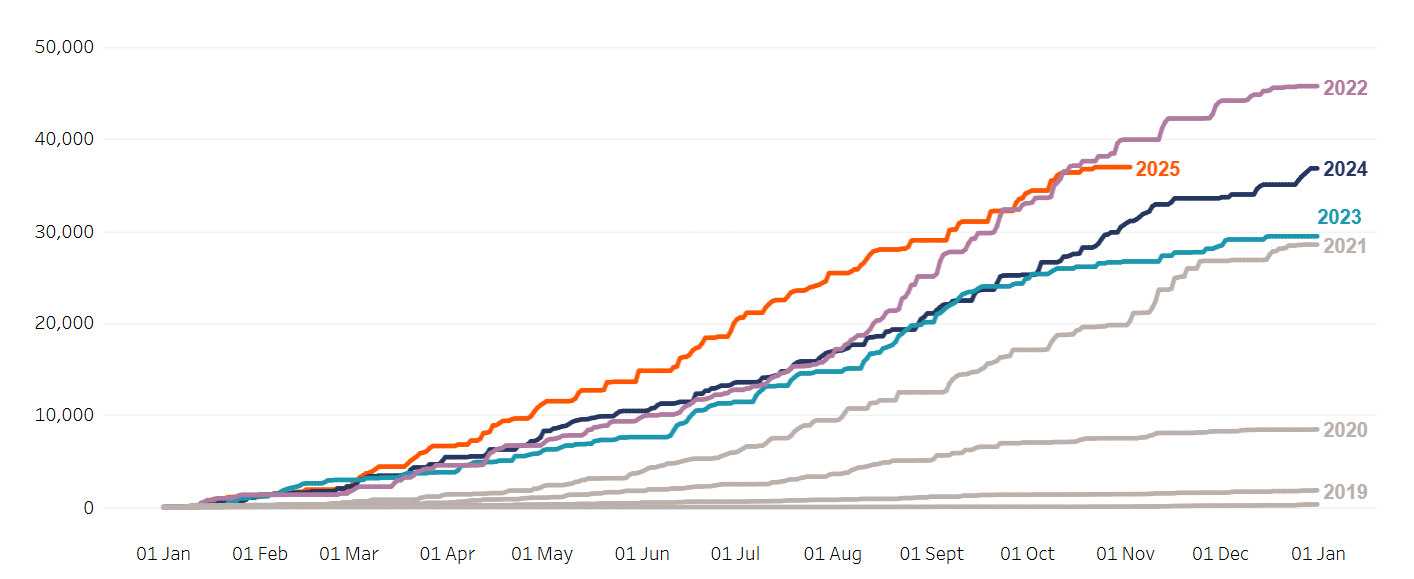
These reports didn’t just concern airports, but the government’s response to the small boats crisis, which by 2024 had become a top three issue in British politics. In particular, Neal criticised a lack of an exit strategy from asylum hotels (link):
“An initial target date for exit from hotels was set for May 2021. This was subsequently extended to March 2022. Both dates proved to be unrealistic. It was not until 29 September 2023, in a submission to ministers, that senior civil servants proposed an “initial hotel exit plan” to close the first 100 hotels “over a manageable period of time”.
An earlier report of his also revealed that asylum seekers were absconding from ‘safe hotels’ (link):
“The Home Office told our inspectors that 227 migrants had absconded from secure hotels between September 2021 and January 2022, and not all had been biometrically enrolled.
“Over a five-week period alone, 57 migrants had absconded – two-thirds of whom had not had their fingerprints and photographs taken. Put simply, if we don’t have a record of people coming into the country, then we do not know who is threatened or who is threatening.”
We’ve since learnt that asylum accommodation will cost taxpayers £15.3 billion, triple the amount the Home Office first claimed (link). To maintain its exit strategy from asylum hotels, the government has fought local authorities in the courts for trying to ban these premises, despite their growing unpopularity.
The costs are surmounting and could reach an additional £1.4 billion if the boats keep coming (link).
Meanwhile, the MAC used its annual report this week to estimate that family visas will cost the UK £5.6 billion and half of those entering on family visas were unemployed (link).
It make you think: Are there any other delays we should be aware of?
It's always cock up and not conspiracy.